Sunday, 2 April 2023

A Trip to Sydney Zoo

In-your-face close-ups are a great way to add visual impact to almost any image - and especially so if the subject is venomous!
This is a Green Tree Snake photographed in Sydney Zoo's reptile house. 600mm Olympus lens, 1/160s at f11, ISO 10,000, file cleaned up using DXO PhotoLab 5
   
 
As is often the case, it's when you are not specifically looking for a great shot that an opportunity presents itself - here in the shape of an Australian Raven that was sitting on a fence watching me eat lunch.

Backgrounds often make or break a shot. In this example you can clearly appreciate that the background is totally separate from the foreground subject, the koala. In a zoo one way to achieve this is to get close-ish to the subject while positioning yourself so the background is a way off (in this case about 10 metres). It also helps to use a telephoto lens with a wide aperture as this is likely to emphasise background softness.
Pic by Natalie Hitchens (200mm lens, f2.8, 1/500s, ISO200).

A good example of how ISO can save a shot - a few years ago I'd never even considered taking pictures inside a nocturnal house (there's a clue in the name - it's dark in there) but with better camera technology and some superb software to clean up the extreme digital noise produced by high ISO settings, you can get some good results. This Yabby was snapped thru glass (obviously) but it was so dark in the exhibit I had to boost the ISO to 12,800 to get a 1/60s @ f5.6 exposure. The excess noise was cleaned up using DXO PhotoLab 5

Here's a reminder about timing. As in the wild, most animal and bird activity can be experience in the early morning and late afternoon. Around the middle of the day your subjects are normally at rest, in the shade - as are these fine wild dogs. Doesn't make much of an interesting shot but I suppose it's a reasonable record of the day (Pic by Natalie Hitchens).

Another reasonable result - this little desert rat only stopped moving for a second or two so first finding, then focussing on the subject was a real challenge. I got a lot of just missed, blurred or plain confusing results. This was the best (sharpest) of the lot recorded with a high ISO of 25,600. DXO produced a remarkably clean looking result, despite the lousy lighting.

Here's a good example of how Auto White Balance can go awry in a place like a zoo's nocturnal house. There was light in this display but it was very subdued and tinted so the RAW file results looked horrible. A bit of jiggling in DXO PhotoLab 5 produced a far more acceptable colour.
(Pic by Natalie Hitchens - 80,000ISO, 1/25s @ f2.8).

Another good idea - meercats are always a big favourite in any zoo - always active, busy watching out for predators or just playing amongst themselves. Here Natalie went for the reflection, adding a different take on an otherwise straight shot. (Pic by Natalie Hitchens - Olympus 135mm lens, 1/8000s @ f2.8).

What was I saying about close-ups? It was hard to get away from this very inquisitive emu. While it was busy trying to peck other people's mobile phones out of their hands, Natalie got this great shot using a 150mm lens setting and an exposure of 1/800s @ f2.8.

Often creative zoo photography can be hard. Sydney Zoo has several posters around its property providing suggesting ways to improve your photo taking. But this can be very tricky if you only have a smartphone - especially as the Hyena was at least 40 feet away. I watch people zooming in on their smartphone screens, blissfully unaware that the more you zoom, the worse the image quality becomes. This hyena was very relaxed sitting in a mud wallow. With a 600mm lens I was able to frame just the back of the animal producing this nice symmetrical pose.

Lizard posing in the nocturnal house. Most of the exhibits in this part of the zoo contain just rocks and sand - not that interesting - so I went for a close up shot of this lizard with a 12-100mm lens. The result was surprisingly good considering the 10k ISO setting shot through plate glass.

Wednesday, 25 January 2023

Queen of the Night

 I have one of these weird looking plants in my backyard for three or four years. It was a gift from a friend who wasn't entirely sure what it was - I stuck it in a pot and left it to do its thing. As it happens it has grown nicely - from 12 inches to over two metres and after a bit of research, discovered that it is Epiphyllum oxypetalum - or more commonly known as Queen of the Night. It's of interest because if and when it flowers, it only does so for one night. Quite by accident I happened to see buds developing one day so waited till dark, set up my Olympus OM1 to snap a time-lapse video to record the event. I waited a couple of hours then checked the results - nada, nothing doing. So maybe next night.  

Queen of the Night (false alarm!)
Looking like a real developing flower head - on the first night this was as good as it was going to get that night. Olympus OM1. 1/20s @ f14 ISO3200 (ExpComp -0.3).

Next night, there I was lurking in the shadows once more, hoping the bud would develop into a full bloom - the flower did begin to open once the sun was down.

An hour later there was a thunderstorm and it started raining quite heavily and of course, this was the night of nights! Once fully open it's about the size of the average saucer and looks really quite beautiful (and fragile).
Shot with the Olympus OM1, 12-40mm f2.8 lens (at 40mm), 1/60s @ f5.6, ISO 6400. Illuminated with a single LED flashlight.

Another shot of a different flower (this plant produced seven flowers in all). Olympus OM1, 1/13s @ f14, ISO 6400 

Here's a close up.
1/10s @ f14, ISO1600

The after party: once the flowering is done, the next day this is what it looks like. If you mess up the camera settings, you have to wait a year for the next opportunity! I was so glad that the Olympus is more or less waterproof otherwise I'd have not got these shots!

Thursday, 8 December 2022

A Trip to Birdland

I love taking pictures of animals, wild or domesticated - sometimes good results are too hard to achieve because you don't know the local conditions wherever you might be visiting - or it's the wrong time of day, month or year for the best shots. To this end I also like checking out the local wildlife parks - which feature a mostly captive audience. On a recent trip down the south coast (as far as Broulee), we decided to give Birdland a go. 


This 7 hectare wildlife park is located on the shoreline between Bateman's Bay and Batehaven. Tripadvisor reviews that I read were mostly negative - the place was 'run down', 'very wet and muddy paths' between exhibits, etc. Interestingly on Google maps the park is barely visible as it's almost entirely covered by trees. Not a bad thing if you are sheltering hundreds of wild animals and birds (or intend to wander about in the heat of the day). It's $26 for an adult entry ticket so we thought we'd give it a go.
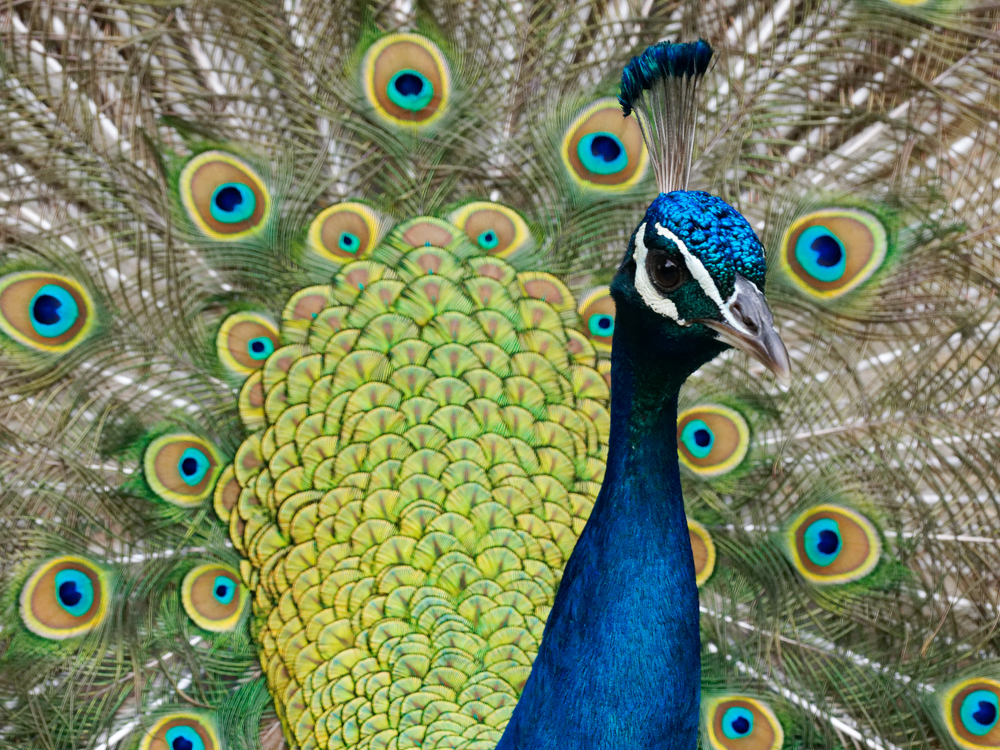
We arrived at 10:30 and were probably only the third or fourth visitors on that day - and the only ones not dragging two-year old kids around in a pram. One review I read complained that there were 'too many peacocks and not enough other animals'. Not sure what planet they were from. Yes, there were a lot of peacocks in the park - we counted more than 20 peacocks, but only a couple of females ('peahens') but we still appreciated their amazing plumage and raucous calls, plus they provided some great photo opportunities. Who doesn't like peacocks?


Right from the entrance gates, the park emanates a feeling of dishevelment - it really looks like the garden of an eccentric old family where all the plants and flower borders are heavily overgrown, with leaf-strewn paths in dire need of sweeping or raking. And the park location map, well, there wasn't one that we saw - just a few bedraggled signposts helpfully pointing in various directions - to the ostriches (the 'Eagles' were crossed out with tape - I wonder what happened there?), to the 'the toilets' (a block that looked as if it had recently been hit by a Turkish Bayraktar drone) plus multiple signs leading us to a wonder of other park residents.

I think these are Green Ring-necked Parakeets. One shortcoming in this park was that not all the birds were labelled clearly - and some enclosures boasted several labels for birds that were clearly not resident at the time we visited. Interestingly Mogo Zoo, 25kms further south, used to have a lot of birds on show, but now has almost none, so I wondered if they ended up in Birdland.

Superficially the park does look as if it's neglected - although to be fair, the exhibited species all looked very well cared for. In fact, the kangaroo, wallaby and ostrich paddocks are huge - much larger than most paddocks in other wildlife parks I've visited. The whole experience is one of wandering through an unkempt overgrown garden populated with a dazzling array of birds, mammals, reptiles and more. I'd thoroughly recommend a visit.

I think this is a Yellow Ringneck Parrakeet.
 
Kookaburra and pigeon - free visitors to the park

A rather hairy looking Swamp Wallaby highlighted in the bright sunshine

Another wallaby with what appear to be slightly buck teeth
 

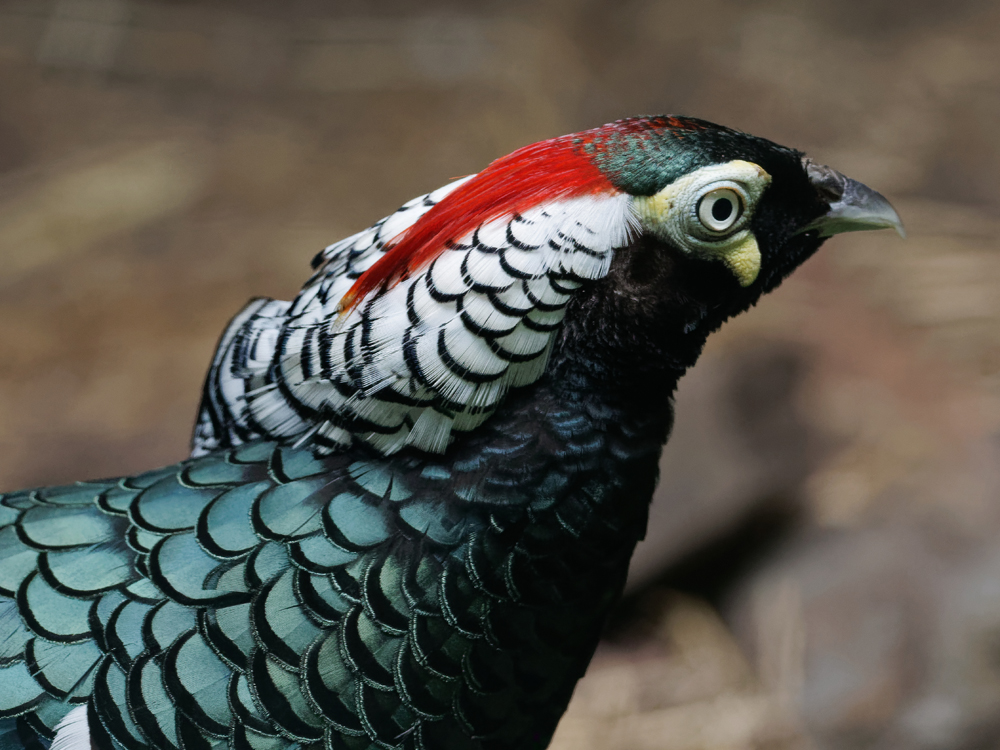
This is a Lady Amherst Pheasant - native of S.W. China and Northern Myanmar - so named as she (Lady Amherst) was the first person to ship one of these strikingly-plumed birds to the UK. She bred them on her estate in Bedfordshire and, with typical English upper crust arrogance, used them for hunting. I read that there are frequent sightings of wild Amherst pheasants - escapees that avoided getting shot and have bred in the wild - but they are not regarded as common by any means. 

Close up of a Barbary Dove - an introduced species

Two very different views of a Peacock - with a 24mm lens and a 600mm lens, at right

Two great views of the cute Frogmouth, a nocturnal bird with exceptional camouflage plumage.

A pair of stoic-looking Bush Stone-Curlews or Thick Knee

Not all the birds on show appeared calm - this magnificent Silver Pheasant just paced back and forth in its enclosure - obviously stressed and not happy with its life in sunny Batehaven. (Natalie had more patience than I did getting this good profile shot of the bird).

Never seen one of these raptors in captivity before - the Australian Kestrel or Nankeen Kestrel - is well know for its exceptional eyesight and its ability to hover in one spot while hunting for small prey - then dropping like a stone to grab whatever unfortunate critter it had its eyes on. 

The park has a pair of female Ostriches who are very curious when visitors approach - they seemed to be quite tame 

A couple more parrot shots - a pair of green parakeets (I think), at left, and a Corella at right. Snapping birds in cages is hard because of the mesh cage. The only way to get rid of the tell-tale mesh is to go close to the fence then focus on a bird that's not too close to the mesh in front or behind it. In the left-hand example the cage is almost invisible while the Corella shot picks up the wire netting easily. Shooting with a wide open aperture (ie. f4) helps defocus any distracting backgrounds.

Just hangin' around . As you can see in this shot, these wallabies have a huge enclosure - I had to walk about a hundred metres into their paddock to get this shot with a 600mm lens. And a beach view as well!

Sunday, 25 September 2022

Gulumyambi Cultural Cruise on the East Alligator River

One thing that's curious about the topography of Kakadu is that you can drive for a seemingly endless way through flat, (mostly) forested top end bush, then suddenly come upon an immense river that stretches off into the distance in both directions. In fact you can recognise a river simply because of the dense foliage growing along the edges of the waterway. This is the East Alligator River just a bit south of Cahills Crossing - the official border point between Kakadu National Park and West Arnhem Land.
We saw a lot of 'salties' (estuarine crocodiles) on this stretch of river - there was one about every 20 metres or so - anywhere there was a beach for them to rest. The fella running the cruise told us it was because of the plentiful supply of fish in the river - they hunt and eat all night and lie bloated on the riverbanks by day. Despite warning signs at every river crossing in the park - and beyond - people continue to risk their lives by wading across the causeway, fishing too close to the water's edge or by getting out of a bogged vehicle looking for help.


Another close up view of an East Alligator River saltwater crocodile (The river was first named by the explorer Phillip Parker King in 1820, because he'd learned about alligators and assumed that these were the same species).

A good view of the Great-billed Heron along the East Alligator River. Listed as 'uncommon' in my hand book, this bird was quite a sight - over a metre high - though a bit shy we got a good view as we drifted past in the tinny. 

A Great Egret wandering along the sand banks of the East Alligator River.
1/1250s @ f8, ISO1600, ExComp: -1.3 stops

South of Cahills Crossing we came to a large outcrop of rock - behind which is this large billabong, a secure source of fresh water for the local indigenous people (the main river is saline and undrinkable).

Our guide pointed out many ambush spots along the river's edge - places where sand dunes reached down to the river's edge providing easy access for mammals to drink - and for crocodiles to strike. 

Typical bushland approaching the Cahill's Crossing area. The local indigenous people perform small burn offs to control the proliferation of undergrowth and thus to limit the possibility of larger, uncontrollable blazes, of the type seen in the southern states a few years ago. 

Typical landscape on the road approaching Ubirr Rock, one of Kakadu's most important rock art sites.

This shot gives you a good idea of what a rock art site looks like. Ubirr has several places where you can view the paintings - and I suspect a lot more places that are not generally open the public (I read somewhere that there are more than 18,000 rock art sites in the region).


Because rock art is essentially an un-curated record of multiple generations of contributors, viewing a panel can be confusing. That said, if you study one area for a while you'll begin to see some amazing illustrations - from a simple hand print to fish, crocodiles, humans and more.  


Crocodile guarding Cahills Crossing - or was it just waiting?
Pic by Natalie Hitchens

An Australian Pratincole on the banks of the wetlands. Pic by Natalie Hitchens.

A tiny Black-fronted Dotterel on the banks of the wetlands. Pic by Natalie Hitchens.


This picture illustrates how intermingled the eco system can be particularly around water. A Great-billed Heron glides across the river just above a 3 metre croc.
Pic by Natalie Hitchens.

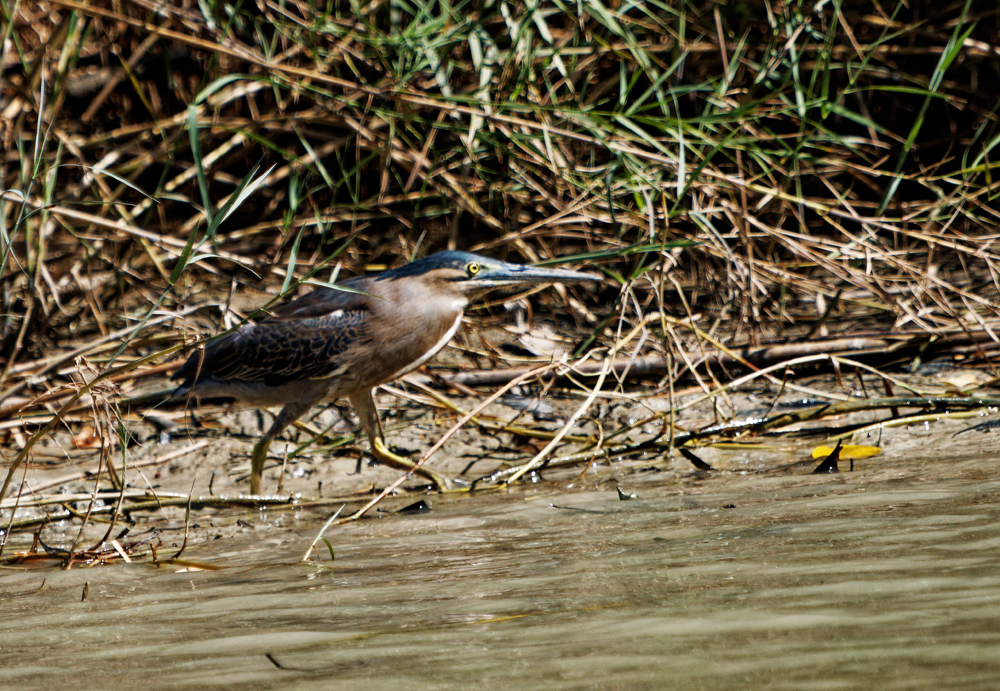
A Striated Bittern on the East Alligator river.
Pic by Natalie Hitchens.


A single Pied Cormorant perched among tree roots on the East Alligator River
Pic by Natalie Hitchens.

A magnificent White-bellied Sea-eagle perched high above the river surveying the wetlands. Pic by Natalie Hitchens.